Webservices
The Plan
- API
- Webservice
- Definition
- Examples
- Microservices Architecture
- Hyper Text Transfer Protocol
- Definition
- Examples
API
Definition
API = Application Programming Interface
Interface between two computers or two programs.
It is an application that provides services to other applications.
The application implements an API or exposes an API.
A fairly broad term that covers:
- Libraries / frameworks:
- Webservices
- A way to access hardware resources
API in a Nutshell
- Exposes methods/functions to users
- Reusable
- Black box
- Contract between provider and user on inputs/outputs
Pour reprendre l’exemple du dessus, le module d’authentification peut être utilisé aussi bien par les utilisateurs pour la version site marchand, que par les admins pour la partie administration.
An API provides a service to users without them needing to know how it works. They only know what it expects as input and what it produces!
Webservices
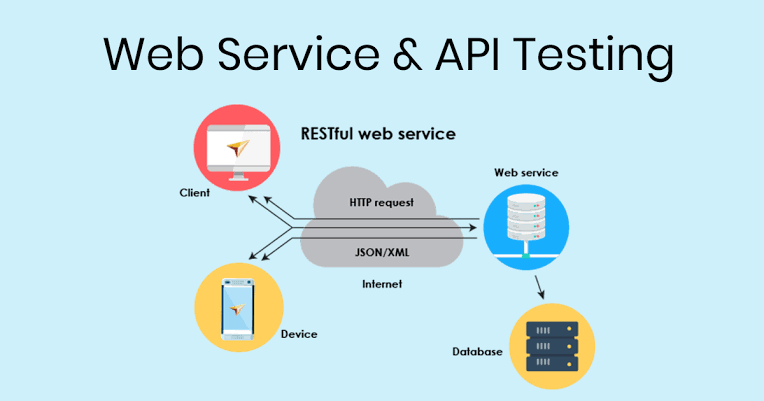
A specific type of API.
Question
In your opinion, does X allow everyone to directly access their databases?
Bien sûr non !
Wait what?!
- But many sites use X’s data!
- How do they do it?
Solution: Web Scraper
Involves writing an application that:
- Connects to a site
- Reads the page to extract information
Problems:
- Creates artificial traffic (on the site’s side)
- Any change in the site breaks our application
- Managing JavaScript 😱😱😱😱
Dire que derrière un site il y a du HTML.
Montrer un exemple ?
Prix SNCF à l’INSEE
Another Solution: Create an Entry Point for Machines
- Accessible from the web
- Made for machines
- Controls what is made accessible
Démo
Webservices
- Web application
- Accessible via HTTP/HTTPS request
- No graphical interface
- Returns data understandable by machines (JSON, XML, etc.)
Webservice : une API particulière que nous allons utiliser
Several Types
- REST: most common, the type you will handle, JSON
- SOAP: more complete but heavier than REST, XML
- RPC: Remote Procedure Call
REST est un style architectural qui définit un ensemble de contraintes et de principes
In Summary
A web service is an application module, accessible over the HTTP protocol via a URL that will respond to a request
➡️ Like a website, but for machines
Microservices Architecture
E-commerce site:
- Authentication WS
- Account management WS
- Payment WS
- Search WS
- Data analysis WS
- Cart management WS
Microservices Architecture
- Each module is an independent web service
- It is the client-side application that will contact them
Useful for large companies with many developers and parallel projects.
Un dessin pourrait peut-être aider
The Client-Server Concept
- THE MODEL THAT GOVERNS THE WEB
- Machines waiting for requests: servers
- Machines making requests: clients
- The client initiates contact, the server responds
Real-Life Comparison
- You are walking down the street and want a Double shot espresso and Cream
- You enter a Starbucks and order your coffee
- The server processes your request and gives you your coffee
- You leave with your coffee
Vous vous moquez de comment à été fait votre café, tant que c’est bon
Hyper Text Transfer Protocol (HTTP)
HTTP
Client-server communication protocol developed for the World Wide Web
Not the only one: FTP, SMTP, IRC…
There are non-client-server protocols: BitTorrent
Avez vous une idée de requête HTTP ?
- Internet est l’infrastructure
- Web est un service qui fonctionne dessus
https : http + SSL
Le navigateur cache le protocole
Secure Sockets Layer (SSL)
Secure connection between a client and a server:
- The client sends a message to the server
- The server responds and sends its certificate
- The client verifies the validity of the certificate
- The client generates a session key encrypted with the server’s public key
- Both parties communicate with the session key
Commencer par parler chiffrage :
- Chiffrage symétrique : Une seule clé est utilisée pour chiffrer et déchiffrer les données
- Chiffrage asymétrique : une clé publique pour chiffrer les données et une clé privée pour les déchiffrer
Certificat :
- Clé publique
- Informations sur le propriétaire
- Période de validité
- Autorité de certification
- Signature numérique : message haché puis chiffré avec clé privée
Video
Les éléments d’une requête
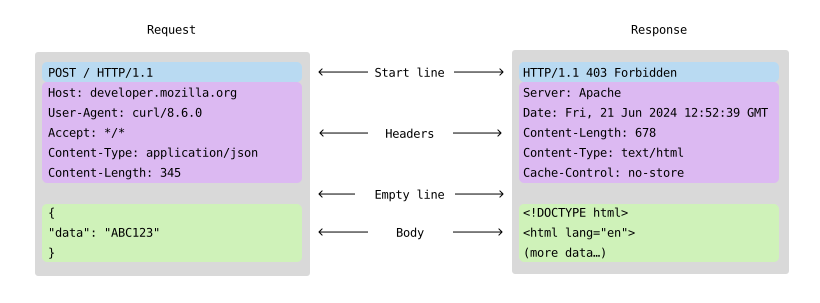
- Location of the resource: URL (domain name + path)
- Method used (GET, POST, UPDATE, DELETE…)
- Request parameters
- Request body
Les paramètres sont derrière le ?
Le corps vous ne le voyez pas, mais il est possible de le voir.
Dans le navigateur, on ne fait que des GET
Elements of a Request
GET https://pokeapi.co/api/v2/pokemon?limit=10&offset=200
- method
- protocol
- ws address
- endpoint
- parameters
Pour aller plus loin : IP, DNS
HTTP Methods
- POST
- GET
- UPDATE
- DELETE
C’est le CRUD !
Comme en SQL
Example
- GET http://web-services.domensai.ecole/attack
- retrieve all attacks
- GET http://web-services.domensai.ecole/attack/2684
- retrieve an attack by its id
- DELETE http://web-services.domensai.ecole/attack/2684
- delete an attack
- POST http://web-services.domensai.ecole/attack
- add an attack
- PUT http://web-services.domensai.ecole/attack/2684
- modify an attack
body
{
  "name": "tickle",
  "attack_type": "physical attack",
  "power": 2,
  "accuracy": 5,
  "description": "string"
}- PATCH http://web-services.domensai.ecole/attack/2684
- modifier seulement certains attributs d’une attaque
In Summary
- HTTP is the protocol of the web
- Method
- URL
- Parameters in URL or body
Contacting/Creating a Webservice
Contacting a Webservice
A tool: an HTTP client
- A web browser (quite limited)
- Insomnia/Postman/Bruno
- Vscode with plugins
- Python with the
requestsplugin
Contacting a Webservice in Python
import requests
# Building the request
url = "https://data.rennesmetropole.fr/api/records/1.0/search/"
parameters = {"dataset": "etat-du-trafic-en-temps-reel", "rows": 2}
# Launching the request
res = requests.get(url=url, params=parameters)
# Displaying the result
print(res.json())
print("\nNumber of rows: ", res.json()["parameters"]["rows"])
import json
import requests
url = "https://anapioficeandfire.com/api/"
end_point = "characters"
parameters = {"gender": "Female", "isAlive": True, "culture": "Braavosi"}
response = requests.get(url=url + end_point, params=parameters)
# Check if the server responded
if response.status_code != 200:
raise Exception(f"Cannot reach (HTTP {response.status_code}): {response.text}")
print(json.dumps(response.json()))- Very easy
res.json()returns a dictionaryget()can becomepost(),put(), etc.
Creating a Webservice in Python
- May seem complex 😵
- But there are tools to help us 😎
- No need to be a computer expert! 🐱💻
3 Frameworks
- FlaskRESTful: mature, lightweight, flexible
- Django: mature, robust, complete
- FastApi: young, lightweight, modern
FastApi pour le TP2
FastApi: The Basics
from fastapi import FastAPI
app = FastAPI()
@app.get("/")

async def root():
    return {"message": "Hello World"}

if __name__ == "__main__":
    uvicorn.run(app, host="0.0.0.0", port=8000)
FastApi
- It is easy to code your endpoints
- The documentation is extremely well done
- You focus on the essentials